What is robotic surgery?
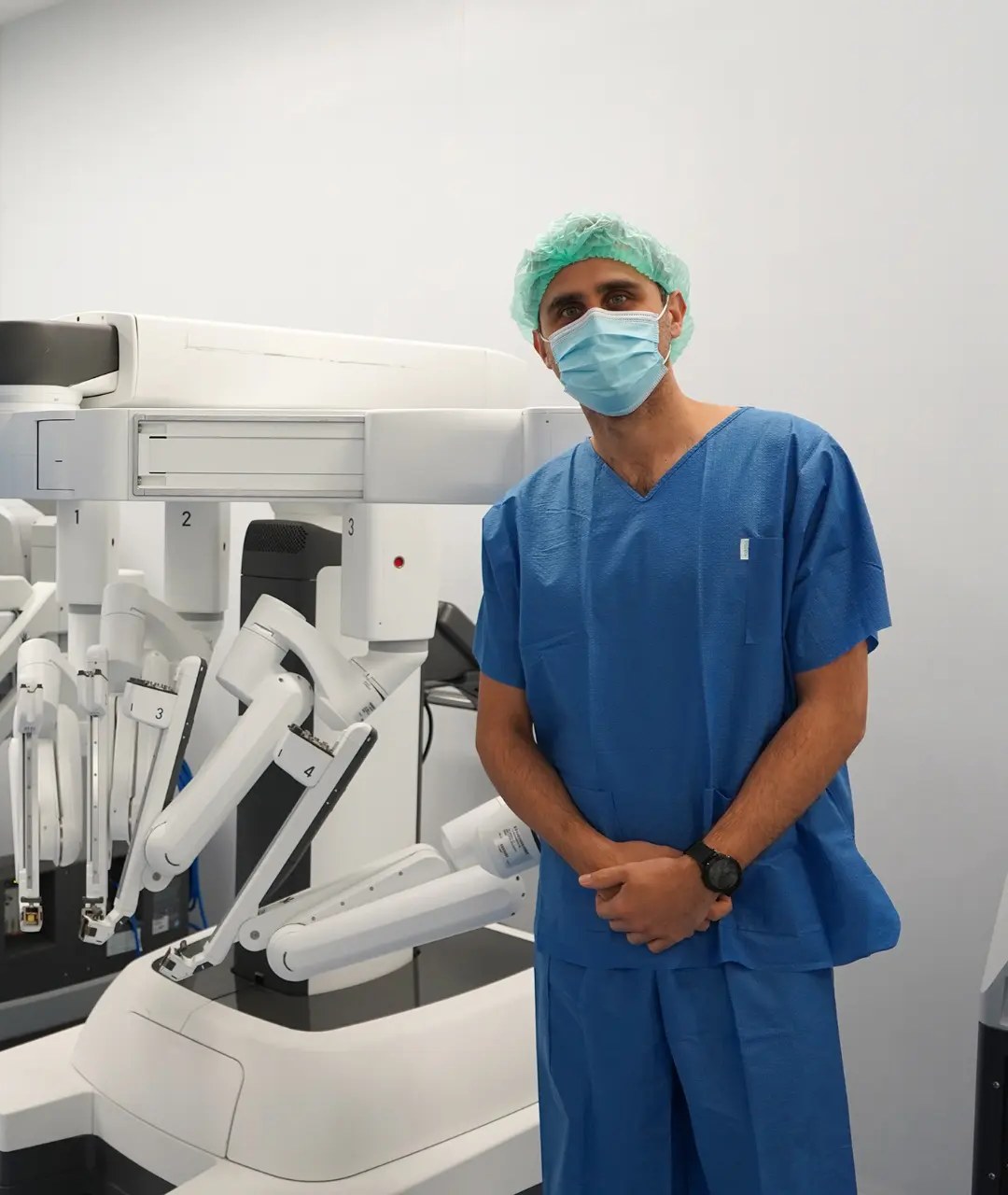
Robotic surgery is an advanced form of minimally invasive surgery: the surgeon operates from a console controlling articulated instruments inserted through small incisions. The system translates their movements with millimetre precision and a magnified three-dimensional view of the surgical field.
It is not an operation performed by a machine: the surgeon decides and performs every movement, with tools that overcome the limits of the human hand.
Benefits for the patient
Less bleeding and lower transfusion needs, less postoperative pain, a shorter hospital stay and a faster return to normal activity, with better functional outcomes in complex procedures.
Procedures performed
Radical cystectomy with urinary diversion and intracorporeal neobladder reconstruction, radical prostatectomy, partial and total nephrectomy, and reconstructive surgery of the upper urinary tract.
Dr. Carrión's team has demonstrated internationally the effectiveness of robotic surgery to repair ureteral strictures after bladder removal — an award-winning study published in European Urology Open Science and recognised by the UB-HUB Chair of Robotic Surgery.
Is it right for my case?
Each situation is analysed in consultation to recommend the safest and most effective approach: robotic, laparoscopic, endoscopic or open. The decision depends on the type of condition, its extent and each patient's characteristics.
International lecture
Robotic management of bladder cancer and its complications
In 2021, Dr. Carrión presented his experience in the robotic management of bladder cancer and its complications on the academic Urooncologia UERJ channel.
Watch the lecture on YouTube